Bolt cutters
 Cable cutters
 Carpenter pincer
 Circlip pliers
 Combination plier set
 Combination pliers
 Crimping pliers
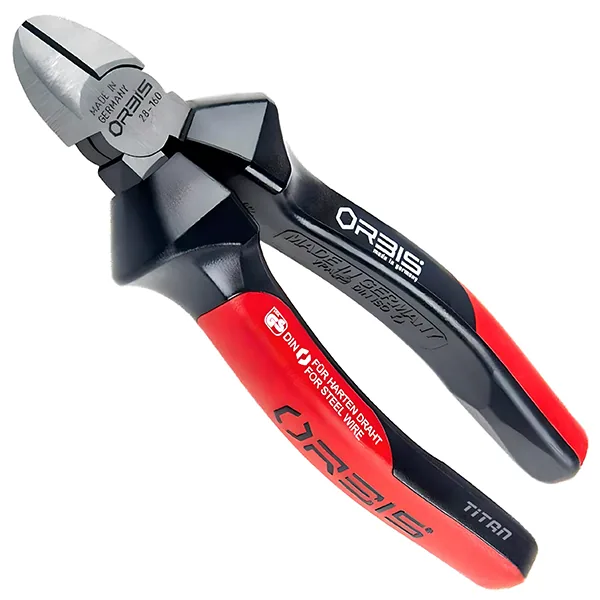
 Electronic Diagonal cutter
 Grip pliers
 Long nose pliers
 Pipe Wrenches
 Pry bar
 Side cutters
 Spark plug connector pliers
 Trade fair
 Universal control cabinet key
 Water pump pliers
 Wire stripping pliers
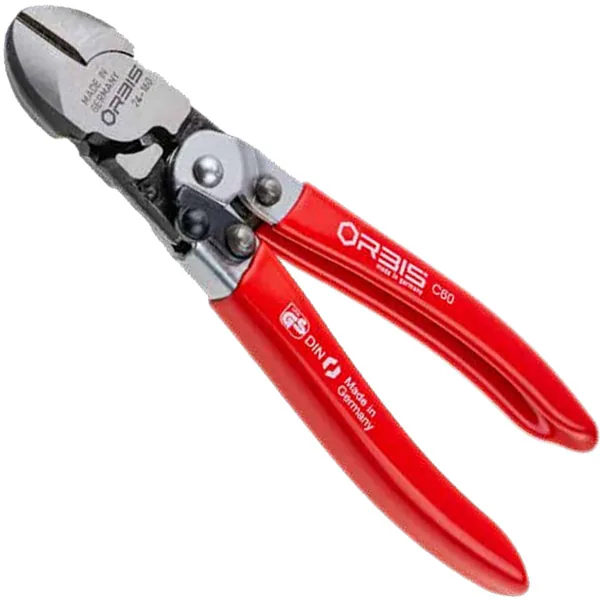
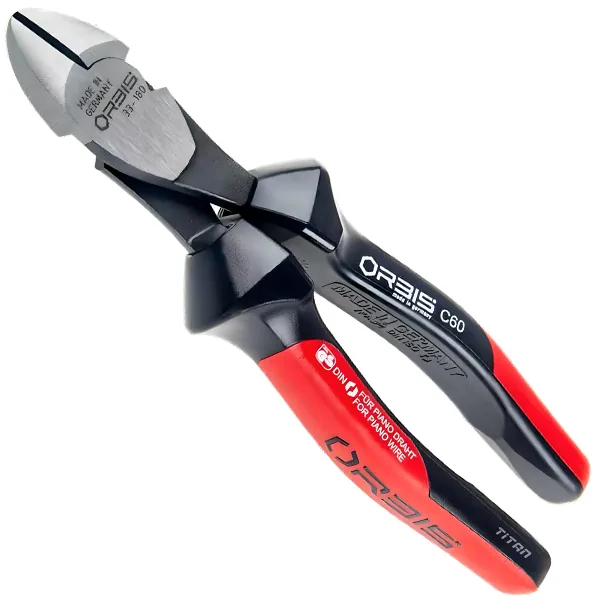
Dual-pivot leverage mechanism reduces cutting force by 50 percent when severing piano wire up to Ø2.2mm diameter at 2000N/mm² hardness. Stamped sheet-steel handles resist torsion, a spring-steel return spring holds jaws open between cuts, and a thumb-slide blade lock secures the tool during storage. Manufactured in Germany with classic plastic-coated grips, this model weighs 135 grams without handle coating.

Leverage diagonal cutting pliers built around a dual-pivot geometry sever piano wire up to Ø2.2mm diameter at 2000N/mm² hardness. The two-pivot mechanism halves the hand force required compared to single-pivot diagonal cutters. Stamped sheet-steel handles resist twisting under load. A spring-steel return spring keeps the jaws open after each cut.


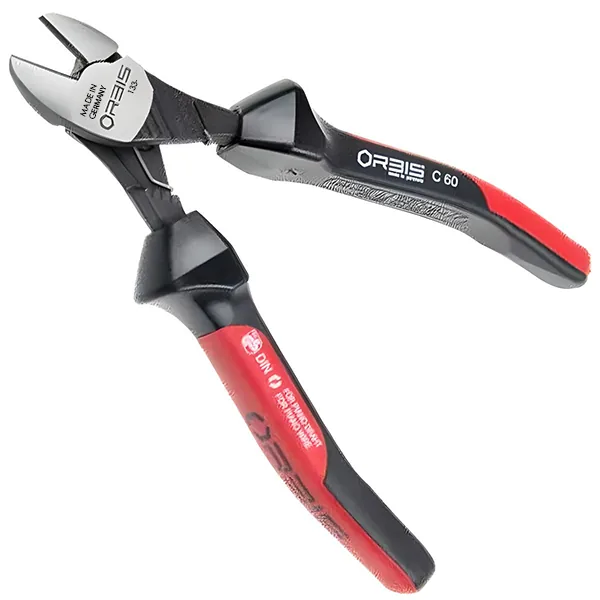
A thumb-slide blade lock catch secures the jaws in the closed position for safe storage and transport. The 24-1600/2022 variant ships with classic plastic-coated grips and weighs 135 grams without handle coating. Manufactured in Germany, this tool is suited to industrial assembly, dental laboratories, and precision craft workshops where hard wire must be cut repeatedly with minimal hand fatigue.
The dual-pivot geometry distributes load across two fulcrums, reducing the force needed to sever hard wire by 50 percent. This mechanism allows operators to cut piano wire at 2000N/mm² hardness, medium steel wire at 800N/mm², and hard wire at 1600N/mm² with less hand strain. The cutting capacity reaches Ø2.2mm for piano wire, Ø3.0mm for medium-hardness steel wire, and Ø2.7mm for hard wire. The two-pivot design is optimized for repetitive cutting tasks in production environments.
The leverage geometry suits industrial assembly lines, dental laboratories, and precision craft workshops where hard wire must be severed cleanly without excessive hand fatigue. The dual-pivot configuration maintains cutting edge alignment under load, ensuring consistent shear performance across the wire diameter range.
Handles are stamped from sheet steel and formed to resist torsional deformation during cutting. The 24-1600/2022 variant features classic plastic-coated grips. A spring-steel return spring holds the jaws open after each cut, eliminating the need to manually reopen the tool. A blade lock catch secures the jaws in the closed position for safe storage and transport; the catch is released by a simple thumb slide. The stamped handle construction provides rigidity without adding unnecessary mass.
The return spring and lock catch streamline workflow in production environments where the tool is picked up and set down frequently. The stamped handle construction and spring-steel return spring are engineered for long service life in professional settings.
This model is used in industrial assembly lines to cut steel wire, in dental laboratories to sever orthodontic wire, and in precision craft workshops to trim piano wire and spring stock. The dual-pivot mechanism suits tasks that involve cutting hard wire repeatedly, such as cable harness assembly, jewelry making, and instrument repair.


The blade lock catch and return spring support efficient operation in production settings where the tool must be secured quickly between cuts. The 50 percent force reduction minimizes hand fatigue during extended cutting sessions.
The ORBIS 24-1600/2022 is one of six handle and surface-finish variants in the 24-1600 series. All variants share the same dual-pivot cutting head and blade lock catch. The 24-1600/2022 variant is distinguished by its classic plastic-coated handles. The tool is manufactured in Germany and carries the EAN 4007582999414. The HS code is 82032000. The stamped steel handle construction and spring-steel return spring are designed for long service life in professional environments.