Bolt cutters
 Cable cutters
 Carpenter pincer
 Circlip pliers
 Combination plier set
 Combination pliers
 Crimping pliers
 Electronic Diagonal cutter
 Grip pliers
 Long nose pliers
 Pipe Wrenches
 Pry bar
 Side cutters
 Spark plug connector pliers
 Trade fair
 Universal control cabinet key
 Water pump pliers
 Wire stripping pliers
Grip pliers handle clamping and holding workpieces firmly across mechanical workshops, automotive garages, and motorcycle repair shops. The toggle-joint mechanism amplifies hand force into high clamping pressure without continuous effort, and the self-locking action keeps jaws closed until the user releases the lever.
Curved jaws conform closely to round surfaces such as pipes, shafts, nuts, and bolts, reducing slippage on cylindrical materials. Integrated cutting edges on the plier body allow cutting soft steel wire, electrical wire, or small cable on the spot, eliminating tool changes.
The ORBIS 60 collection offers three sizes—180 mm with 30 mm jaw opening, 250 mm with 50 mm opening, and 300 mm with 60 mm opening—meeting needs from small fasteners to larger diameter materials. Each size balances lever ratio for sufficient clamping force while remaining easy to operate. All models are genuine ORBIS products imported with full manufacturer warranty and technical support.
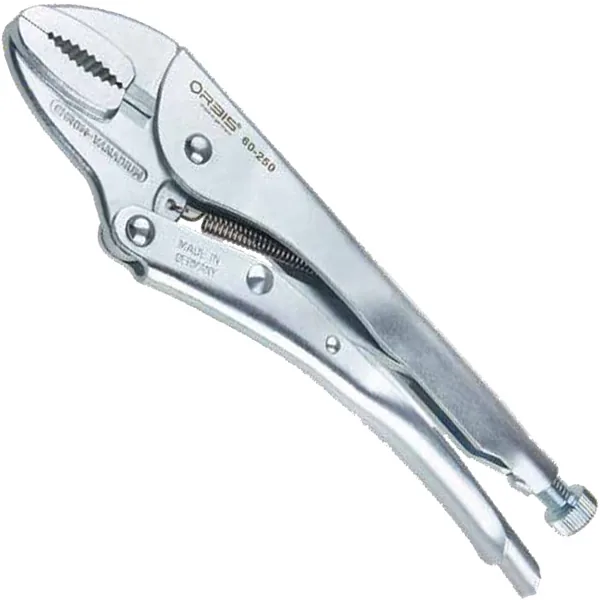
Grip pliers, also known as locking pliers, are a common and essential tool in any mechanical workshop. They are even a must-have for car garages and motorcycle repair shops. They are so widespread, yet for different trades, grip pliers are manufactured differently. Setting aside the jaw design, the handles of the pliers are similar.
Grip pliers serve to clamp and hold workpieces firmly in many repair, assembly, or machining situations. The toggle joint mechanism amplifies hand grip force, creating high clamping pressure without requiring continuous human effort. When the jaws close, the self-locking mechanism holds the material securely until the user releases the lever.
Thanks to this, mechanics, electricians, automotive technicians, or motorcycle repair technicians can free their hands to perform other operations while the workpiece remains in position. Curved jaws conform closely to round surfaces such as pipes, shafts, nuts, or bolts, reducing slippage and increasing grip. Integrated cutting edges on the plier body allow cutting of soft steel wire, electrical wire, or small cable on the spot, saving time switching tools.
The ORBIS 60 range provides three sizes of length and jaw opening, meeting needs from small parts to materials with larger diameters. Each size is designed with an appropriate lever ratio, ensuring sufficient clamping force while remaining easy to operate in tight spaces or during continuous work.
The toggle joint mechanism converts hand grip motion into clamping force many times greater. When the user squeezes the handle, the toggle joint passes over the dead center and automatically holds the jaws tightly closed. Clamping pressure remains stable without requiring continuous hand grip.
To open the jaws, simply press the release lever; the toggle joint returns to its initial position and the jaws open automatically. This design allows technicians to free both hands to perform welding, bolt tightening, measuring, or cutting while the workpiece remains firmly fixed. The self-locking mechanism is especially useful when working alone, without an assistant to hold the material.
The durability of the toggle joint depends on the steel material and machining precision, ensuring the joint does not loosen or wear after many opening and closing cycles.
The ORBIS 60 range is equipped with a precision-machined toggle joint mechanism that operates smoothly and durably. Each squeeze moves the joint smoothly past the dead center without jerking. The release lever is positioned within easy reach, allowing quick jaw opening when changing clamping position is needed. All three sizes in the range share this mechanism principle, differing only in lever ratio to suit jaw opening and required clamping force. Users can adjust jaw opening before locking, thanks to an adjustment screw on the plier body. This adjustment allows the pliers to adapt to many workpiece sizes without changing tools.
Curved jaws are designed in an arc shape, conforming closely to round surfaces such as steel pipes, machine shafts, hexagonal nuts, or bolts. The curved shape increases contact area, reduces local pressure, and limits slippage when clamping. Small serrations on the jaw face bite into the material surface, increasing friction and holding more securely.
When clamping pipes or shafts, curved jaws distribute force evenly, avoiding deformation or scratching of soft parts. Conventional flat jaws struggle to grip round objects tightly and slip easily under high clamping force. Curved jaws overcome this drawback, particularly useful in automotive repair, motorcycle repair, or pipe assembly.
The curvature and groove depth of the jaws are calculated to suit the range of material diameters that each plier size supports.
The ORBIS 60 range is equipped with curved jaws with sharply machined serrations, ensuring firm grip even on smooth or oil-covered surfaces. Model 60-1800-3400 opens jaws to a maximum of 30 mm, suitable for small pipes, medium-sized machine shafts, or nuts M20 and below. Model 60-2500-3400 opens jaws to 50 mm, meeting needs for larger pipes, motor shafts, or parts with medium diameters. Model 60-3000-3400 opens jaws to a maximum of 60 mm, handling materials with large diameters such as industrial steel pipes, drive shafts, or large bolts. Each size maintains the curved jaw design, only changing dimensions to expand the application range.
The cutting edge mounted on the plier body allows cutting of soft steel wire, electrical wire, or small cable without requiring a separate tool. The edge is heat-treated hard, maintaining sharpness after many cuts. The edge position is placed near the joint, utilizing large leverage for easy cutting.
When cutting wire is needed, the user places the wire in the edge groove, squeezes the plier handle, and the edge cuts the wire quickly. This utility reduces the number of tools to carry, especially useful on construction sites or when working at height.
The cutting edge does not replace dedicated cutting pliers for hard wire or large cable, but is sufficient for light cutting tasks commonly encountered in electrical repair, mechanical work, or assembly.
All three models in the ORBIS 60 range integrate a wire cutting edge at the same position on the body. The cutting edge of 60-1800-3400 is suitable for single electrical wire or soft steel wire of small diameter. The cutting edges of 60-2500-3400 and 60-3000-3400 have greater thickness, withstanding higher cutting force when handling harder wire or multi-strand cable. Users should check edge sharpness periodically, avoiding use of dull edges that cause joint wear or wire deformation. If the edge wears, it can be resharpened or the pliers replaced depending on wear level and work requirements.
Plier length directly affects leverage and clamping force. Long pliers create large leverage, easily generating strong clamping force but are heavy and difficult to operate in tight spaces. Short pliers are light and flexible but have smaller clamping force. Jaw opening determines the maximum material size that can be clamped. Choosing pliers with just-sufficient jaw opening helps optimize clamping force and avoid wasting size. The ORBIS 60 range provides three sizes of length and jaw opening, allowing users to choose according to specific job requirements.
Model 60-1800-3400 is 180 mm (7 inch) long, opening jaws to a maximum of 30 mm. This size is light, easy to carry, and suitable for small parts such as water pipes, electrical wire, medium-sized machine shafts, or nuts M20 and below. Electricians, electronics technicians, or motorcycle repair technicians often prefer this size for its compactness and sufficient clamping force for most daily tasks. Model 60-2500-3400 is 250 mm (10 inch) long, opening jaws to a maximum of 50 mm. This size balances clamping force and weight, handling industrial steel pipes, motor shafts, or parts with medium diameters. Mechanics, pipe assembly technicians, or equipment maintenance technicians often choose this size for its versatility. Model 60-3000-3400 is 300 mm (12 inch) long, opening jaws to a maximum of 60 mm. This size creates the greatest clamping force, suitable for materials with large diameters such as thick steel pipes, drive shafts, or large bolts. Welders, steel structure assembly technicians, or heavy machinery repair technicians often use this size when needing to hold large parts securely for extended periods.
In automotive garages, grip pliers hold oil lines, coolant hoses, or cables firmly during removal and installation. Technicians can clamp hoses to prevent oil or water leakage when disconnecting joints. Pliers also hold rusted bolts or nuts tightly, allowing technicians to use wrenches or sockets to turn without worrying about the part rotating. When replacing bearings, pliers clamp the shaft to maintain position while removing or installing the bearing. The integrated cutting edge is useful when cutting electrical wire or cable in the vehicle electrical system is needed. The 180 mm size suits motorcycles or small cars; the 250 mm and 300 mm sizes suit larger cars or trucks.
In motorcycle repair shops, grip pliers hold fuel lines, brake fluid lines, or throttle cables during removal and installation. Technicians clamp hoses to prevent fuel or oil from spilling when disconnecting joints. Pliers also hold wheel axles, piston shafts, or other small parts tightly when machining or inspection is needed. Curved jaws conform closely to round shafts, avoiding slippage and surface scratching. The cutting edge helps cut electrical wire or throttle cable quickly. The 180 mm size is sufficient for most motorcycle repair tasks, light and easy to grip in tight spaces under the seat or near the engine.
Welders use grip pliers to hold metal sheets, steel pipes, or bars firmly when welding. Pliers clamp two parts tightly together, ensuring the weld is straight and secure. The self-locking mechanism allows welders to free their hands to hold the welding torch or rod without needing an assistant to hold the material. Curved jaws conform closely to round pipes, keeping pipes from rolling when welding joints. The cutting edge is useful when cutting welding wire or steel wire for temporary binding is needed. The 250 mm and 300 mm sizes are common in welding shops, providing sufficient clamping force for thick steel sheets or large pipes.
In metal fabrication, grip pliers hold workpieces when drilling, sawing, or grinding. Pliers clamp steel bars, aluminum pipes, or metal sheets to the machine table, avoiding vibration or movement during machining. The self-locking mechanism keeps the workpiece stable throughout the drilling or sawing process. Curved jaws suit round parts; serrated jaws grip firmly on smooth surfaces. The 180 mm size is sufficient for small parts; the 250 mm and 300 mm sizes suit large parts or when high clamping force is needed.
Before clamping, check that jaws are clean, free of oil or debris. Oil reduces friction, increasing slip risk. Adjust jaw opening to suit material size, avoiding opening too wide which reduces clamping force. Squeeze the handle gradually until the toggle joint mechanism locks tightly; do not squeeze too hard causing joint damage. When opening jaws is needed, press the release lever gently, avoiding jerking which wears the mechanism. Do not use grip pliers to turn nuts or bolts, as jaws are not designed to withstand large torsional force. Do not use pliers as a hammer or lever, avoiding bending or breaking the plier body.
After use, wipe jaws and plier body clean, removing dust or metal fragments. Apply a thin coat of maintenance oil to the toggle joint and release lever to keep the mechanism operating smoothly. Store pliers in a dry place, avoiding moisture that causes rust. Check cutting edge sharpness periodically, resharpening if needed. Check whether the toggle joint is loose or worn; replace pliers if the joint no longer locks tightly. Do not drop pliers from height, avoiding joint misalignment or body cracking. Proper maintenance helps grip pliers maintain performance and long service life.
Choose length and jaw opening based on the size of materials you regularly work with. If you mainly clamp small parts such as electrical wire, small water pipes, or nuts M20, the 180 mm size is sufficient and convenient to carry. If you work with industrial steel pipes, motor shafts, or parts with medium diameters, the 250 mm size balances well between clamping force and weight.
If you frequently handle large materials such as thick steel pipes, drive shafts, or large bolts, the 300 mm size provides the strongest clamping force. Consider the work environment: tight spaces favor short pliers; spacious construction sites can use long pliers. If you need to cut wire frequently, prioritize ranges with integrated cutting edges such as ORBIS 60. If budget allows, equip all three sizes for flexibility in responding to many different situations.